A FIBC (flexible intermediate bulk container) is a simple-looking product, but a good specification is the result of a series of decisions. Each one affects how safely and efficiently the bag works with your product, your equipment and your logistics.
This guide walks through the key factors in order — from the material you are packing to the way the filled bag will be handled. Where numbers are used, they are intended as examples for discussion, not as a substitute for confirming your own specification.
Start with the material you are packing
The single most important input is the product itself. Before anything else, collect the basic facts about your material:
- Product name and grade — different grades of the same product can behave differently.
- Particle size and shape — coarse granules, pellets and fine powders all demand different bag designs.
- Moisture content and behaviour — is the product dry, slightly damp, or hygroscopic (prone to absorbing moisture from the air)?
- Contamination requirements — does the product need protection from dust, moisture or foreign particles?
- Flow behaviour — does the product flow freely, or is it cohesive and prone to bridging?
These details drive most of the decisions below. If you are unsure about any of them, they are exactly the questions to raise with the supplier before a specification is fixed. A bag selected on a generic description of a product is much more likely to be wrong than a bag selected on its actual properties.
Confirm the bulk density
Bulk density is the weight of a loose volume of your material, usually expressed in kilograms per cubic metre (kg/m³) or grams per litre. It tells you how much volume a given weight of your product occupies.
Bulk density matters because a FIBC is a volume with a load limit. If you assume the wrong bulk density, you can end up with a bag that is too small for your target weight, or so large that it is only partly filled.
Bulk density can vary with particle size, moisture and how the material is handled. Where possible, confirm the bulk density of the actual product under realistic filling conditions rather than relying on a single handbook value. This is a discussion point with your supplier, not a fixed standard.
Choose a working load — not a guess
The safe working load (SWL) is the maximum gross weight the filled bag is designed to be lifted with, normally including the weight of the bag itself and the contents. It is the load figure used in practice.
Common working loads for FIBCs are around 500 kg, 1000 kg, 1500 kg and 2000 kg. The final working load is confirmed for the selected structure, such as our open-top flat-bottom FIBC or duffle-top flat-bottom FIBC.
Choosing the working load is not the same as choosing the heaviest bag available. A bag is only safe when every part of the specification — fabric, size, construction and lifting — is consistent with the chosen load. The load should match your actual filling and lifting practice, and the way the safety factor is applied should be understood (see our guide on SWL and safety factor).
Choose the bag size and check the effective volume
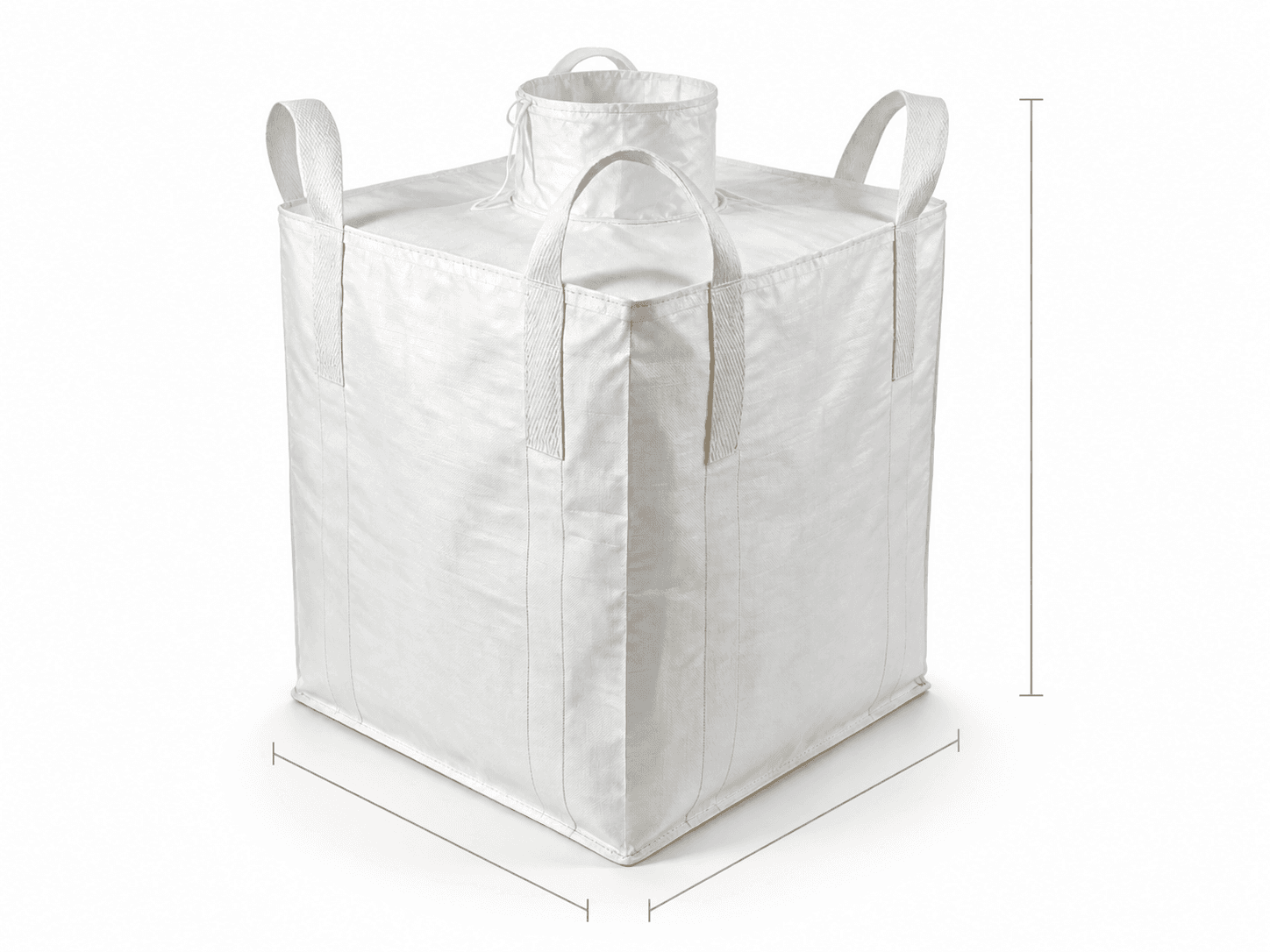
The internal size of a FIBC is normally given as length × width × height. The volume of a filled bag is not simply the product of those three dimensions: the material settles, the walls bulge, and the bag distorts under load. Because of this, the effective usable volume is usually smaller than the nominal volume of the flat, empty bag.
A useful approach is to work backwards: divide your target fill weight by the bulk density of the material to get the volume the product occupies, then confirm that the bag can hold that volume with the headroom needed for filling and closing. Working with approximations is fine at this stage, but the final size should be confirmed against the real product. Our size and volume guide covers this in more detail.
Consider the fabric weight (GSM)
The fabric of a FIBC is woven polypropylene, and its weight is expressed in grams per square metre (GSM). A heavier fabric is generally associated with a higher load rating, but the relationship is not a simple rule: bag size, construction and the way the fabric is sewn also contribute to strength.
GSM is one line of the specification, not the whole story. A sensible specification states the working load, the fabric weight and the construction together, and treats them as one package that is confirmed as a whole.
Choose the top structure
The top of the bag affects how easily the bag is filled and how it is closed. Common options include:
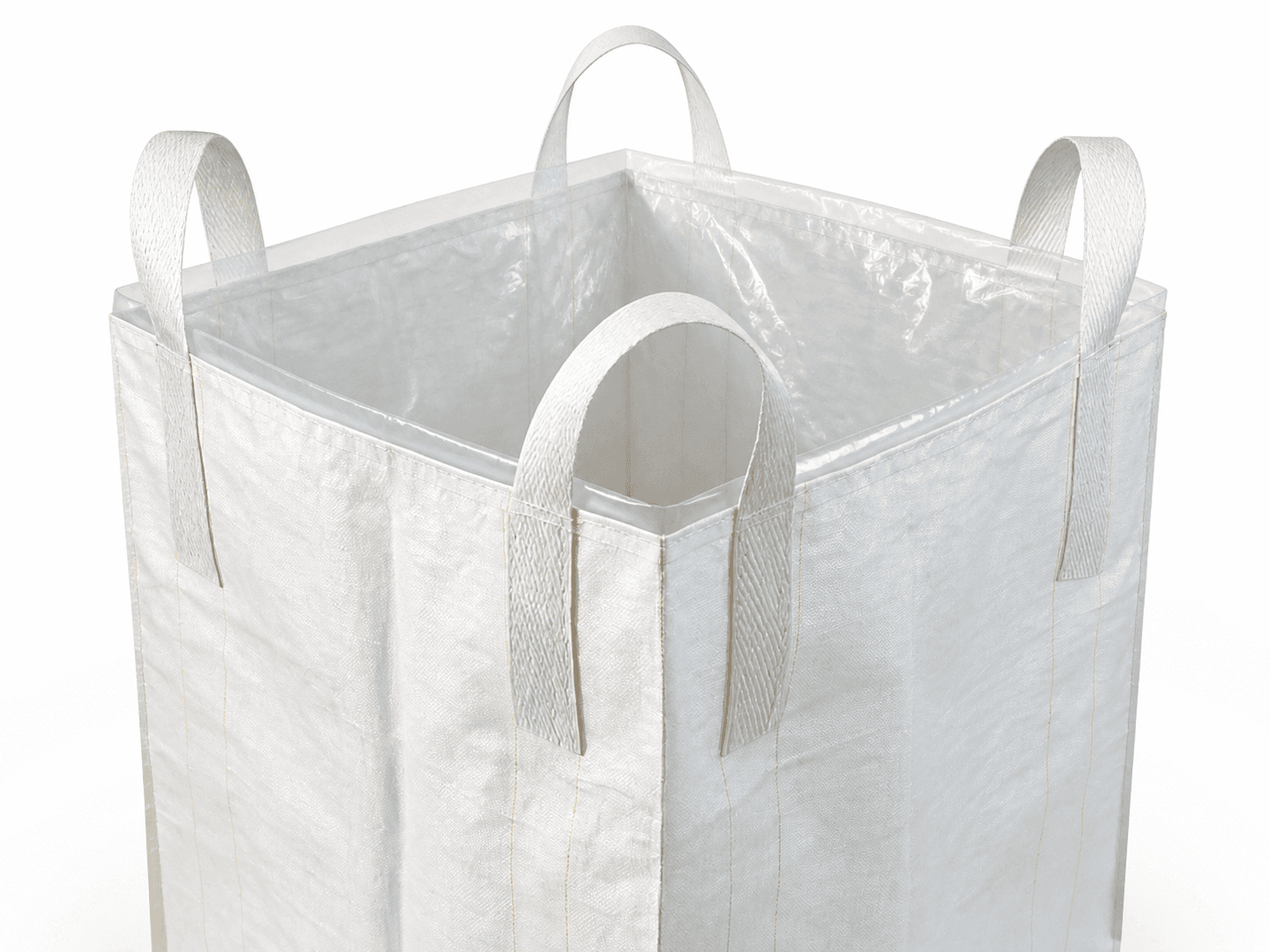
- Open top — a simple, wide opening, filled from above and closed by tying or folding the fabric.
- Duffle top — a short cylindrical spout, usually filled through a filling head and closed by tying.
- Filling spout — a longer spout that allows the bag to be filled through a sealed connection.
The right choice depends on your filling equipment and how much dust control you need. Our guide to FIBC top types explains the differences in detail.
Choose the bottom structure
The bottom determines how the bag is discharged. A flat bottom is simple and suited to applications where the bag is emptied by cutting, tipping or manual discharge. A discharge spout allows controlled bottom discharge into a hopper or conveyor, and is useful for repetitive emptying.
The choice affects unloading speed, residual material and how easily the bag can be re-used. Our guide to FIBC bottom types compares the two in detail.
Consider the lifting arrangement
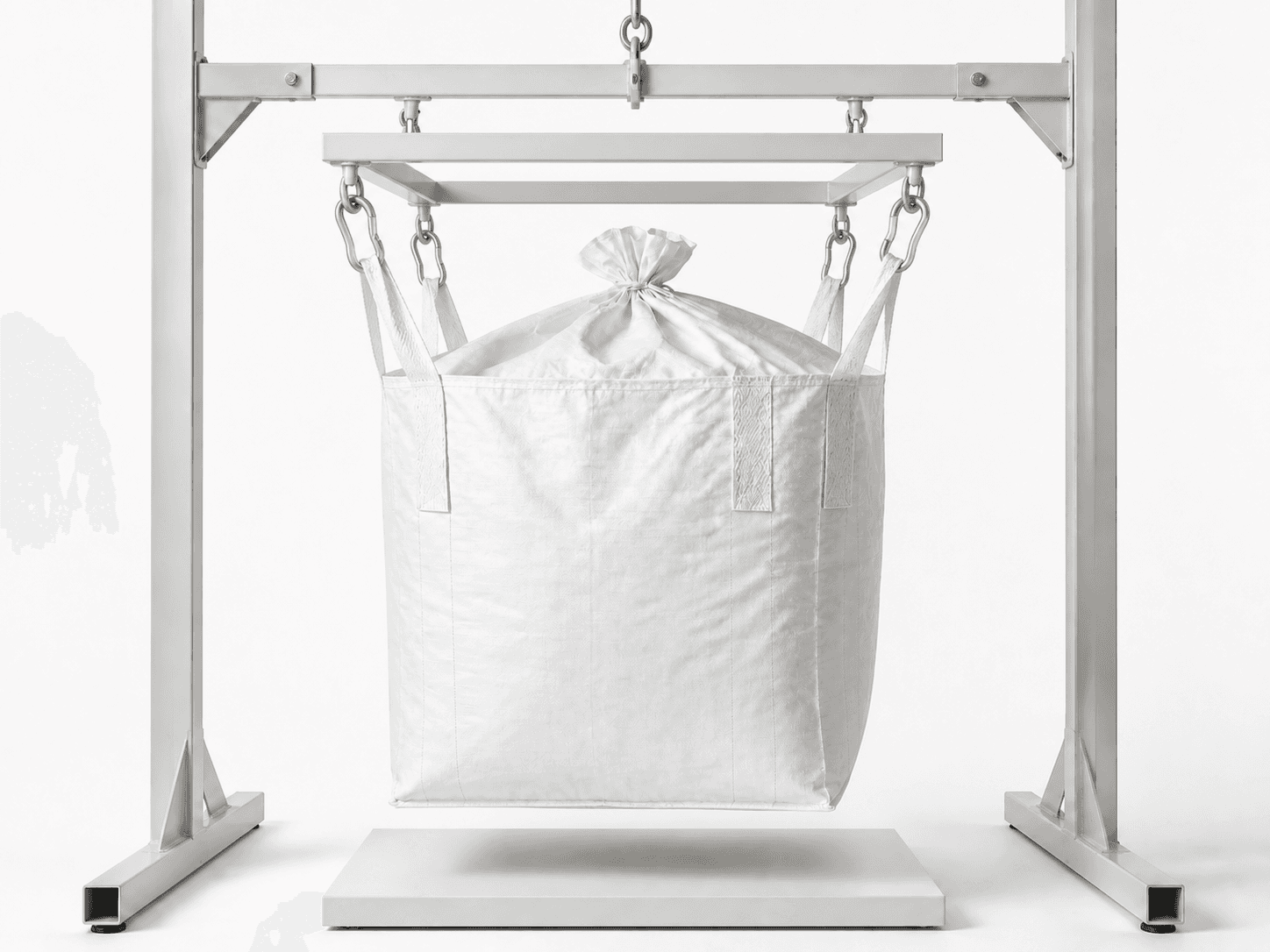
FIBCs are lifted by loops or straps. The most common arrangement is four lifting loops, which allows the bag to be handled with a spreader frame or crane. The length of the loops and the way they are constructed affect how the bag sits when lifted and how much stress is placed on the top of the bag.
Lifting must be matched to the equipment on site. This is a key detail to confirm rather than assume.
Decide whether a liner is needed
A liner is an inner layer, often polyethylene (PE), that separates the product from the woven fabric. A liner can help with fine powders, moisture-sensitive products and products with contamination requirements. It is not automatically required for every product.
The decision should be based on the product and its environment. Our guide to when a FIBC needs a PE liner explains the trade-offs in detail.
Plan for handling and transportation
A FIBC does not exist in isolation. The specification should account for how the filled bag is moved — by forklift, crane or other equipment — and how it is transported and stored. A bag that is fine in the warehouse may be challenged by rough handling or long storage in direct sunlight.
Consider the working conditions honestly: loading and unloading methods, stacking, exposure to weather, and the journey the bag takes from filling to final use.
Confirm the specification against the real working conditions
Every FIBC should be confirmed against the actual product and working conditions before it is produced. The choices above interact: bulk density affects size, size affects fabric and load, load affects lifting, and so on. A specification that reads well on paper can still be wrong for a real product.
This is why suppliers ask for the product details before quoting. When you are ready to discuss your requirement, a quote request with the product name, bulk density, target weight and the way the bag will be filled, lifted and discharged gives everyone the information they need to start with a sensible specification.