

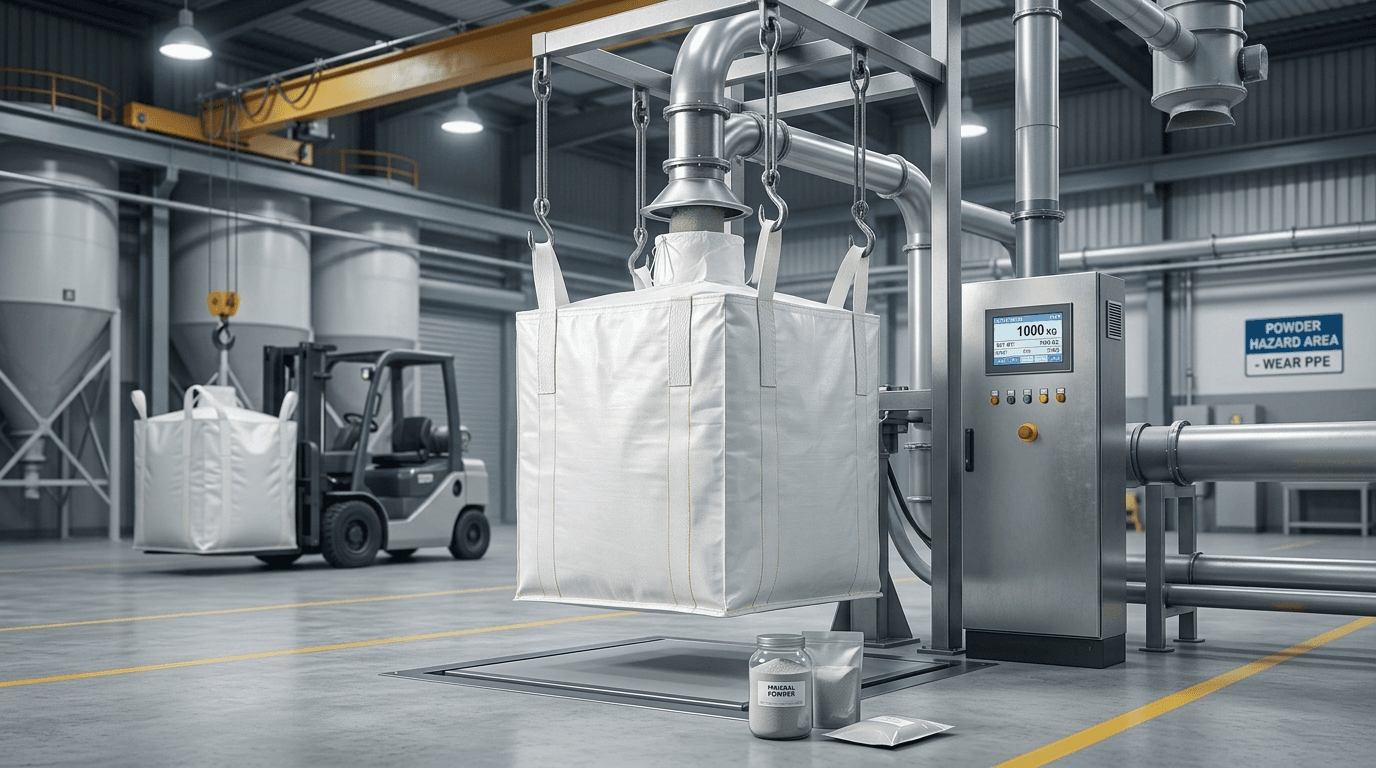
Industrial powder
1000 kg140–180 gsmIndustrial Powders
Industrial Powders
Define the powder before defining the bag
Fine and active powders that require controlled filling, secure containment and clean discharge.
Industrial powder is a broad handling category rather than one uniform material. Mineral powders, formulated products and processed fines can differ significantly in bulk density, particle size, flow behaviour, moisture sensitivity and cleanliness requirements.
Those differences change how the FIBC fills and empties. A powder may flow freely, retain air, bridge above an outlet or require a tighter process connection. The filling head, bag dimensions and discharge interface therefore need to be reviewed as one handling system.
Containment options are also material-specific. Fabric coating, seam construction, liner material and any static-control requirement should follow the actual product information and the customer’s process assessment—not a generic powder specification.
Wide variation in material data
Bulk density, particle size and aeration behaviour can change bag volume, stability, filling time and the target unit load.
Flow is process-specific
Some powders discharge readily while others may bridge or retain air, making outlet size and the receiving arrangement important.
Containment needs differ
Dust, moisture, contamination and static-control requirements must be assessed for the actual material and operating environment.
Industrial Powders
Recommended FIBC Configuration
A filling-spout / discharge-spout FIBC is a strong baseline for connected powder handling. The final dimensions, seam, fabric, liner and lifting system should be specified only after the powder and both equipment interfaces are confirmed.
- Recommended SWL
- 1000 kg
- Fabric GSM
- Approx. 140–180 gsm (confirm against actual powder and bulk density)
- Top
- Filling spout
- Bottom
- Discharge spout
- Lifting
- 4 loop / 2 loop
- Liner Recommendation
- Optional PE liner based on moisture, dust and contamination requirements
Why This Configuration
The inlet creates a controlled connection
A filling spout can be sized to the filling head and clamping method, reducing the open area around powder transfer.
The outlet connects to downstream equipment
A discharge spout provides a defined emptying path and can be matched to a hopper, enclosure or process connection.
Protection remains configurable
Coating, seam construction and an optional liner can be selected for the confirmed moisture, dust and contamination requirements.
Industrial Powders
Key Considerations
Because this category covers many different powders, the following inputs are essential. A useful specification cannot be completed from the words “industrial powder” alone.
Exact material profile
Provide product identity, bulk density, particle size, flow behaviour, moisture limits and target net weight.
Equipment dimensions
Confirm filling-head and receiving-port diameters, clamping details, available height and bag-support method.
Containment level
Define acceptable dust release, seam requirements, cleanliness expectations and whether a liner is needed.
Material-specific controls
Review compatibility, static-control needs and site handling procedures using the actual product and process assessment.
Industrial Powders
Recommended Products
The three recommended structures cover a defined filling-spout connection with either controlled discharge or a flat base, plus a wider duffle sleeve when the filling head and operating access call for more tolerance.
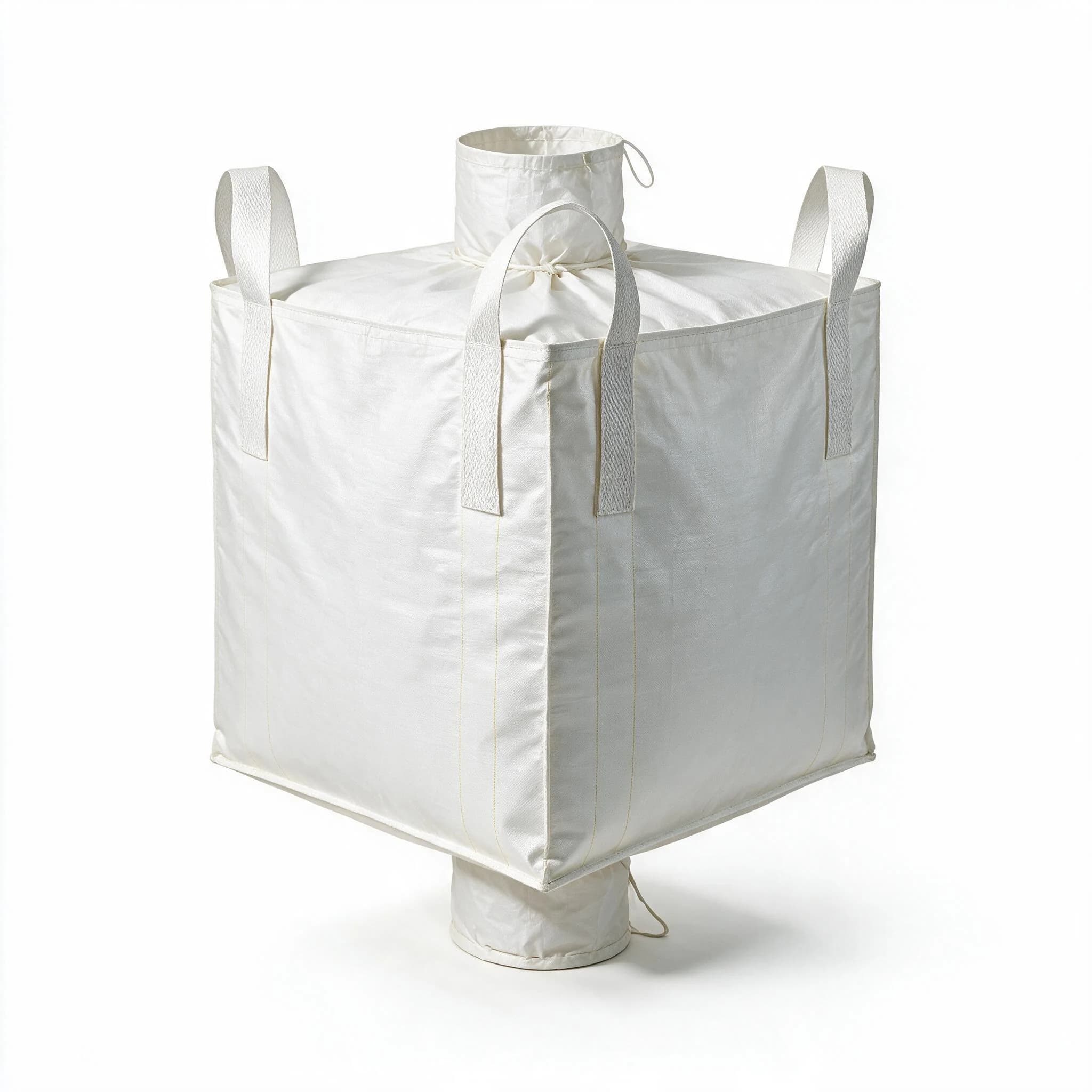
Filling Spout / Discharge Spout FIBC
Filling spout above, discharge spout below — a complete high-volume flow path.
View Details
Duffle Top / Discharge Spout FIBC
A duffled top for clean, low-dust filling and a bottom spout for controlled discharge.
View Details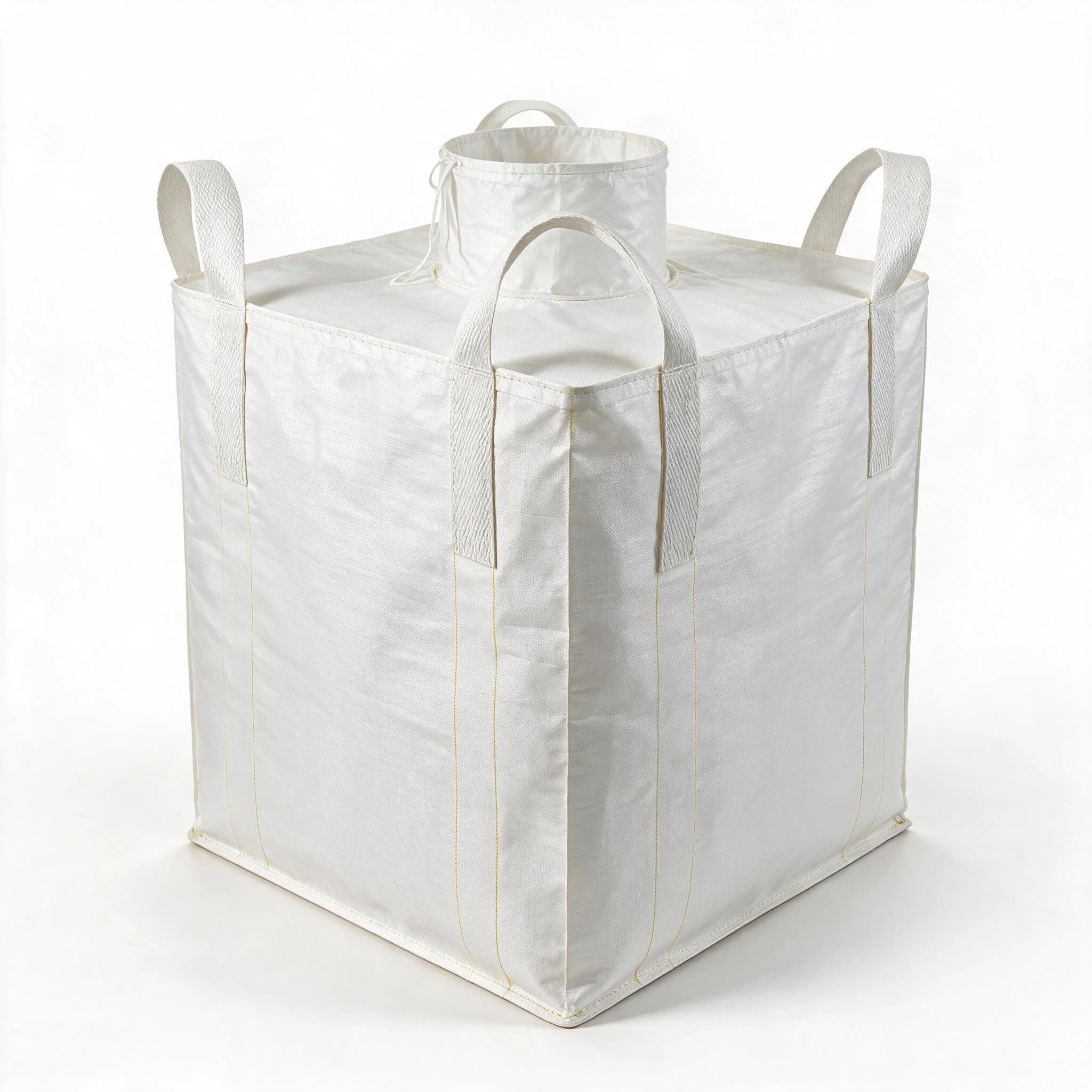
Filling Spout / Flat Bottom FIBC
A straight filling spout on a flat, stable bottom — strong, stackable and economical.
View DetailsRelated Guides
Guides about this material
These guides compare liner, top and bottom choices so the connected powder-handling configuration can be checked before production.
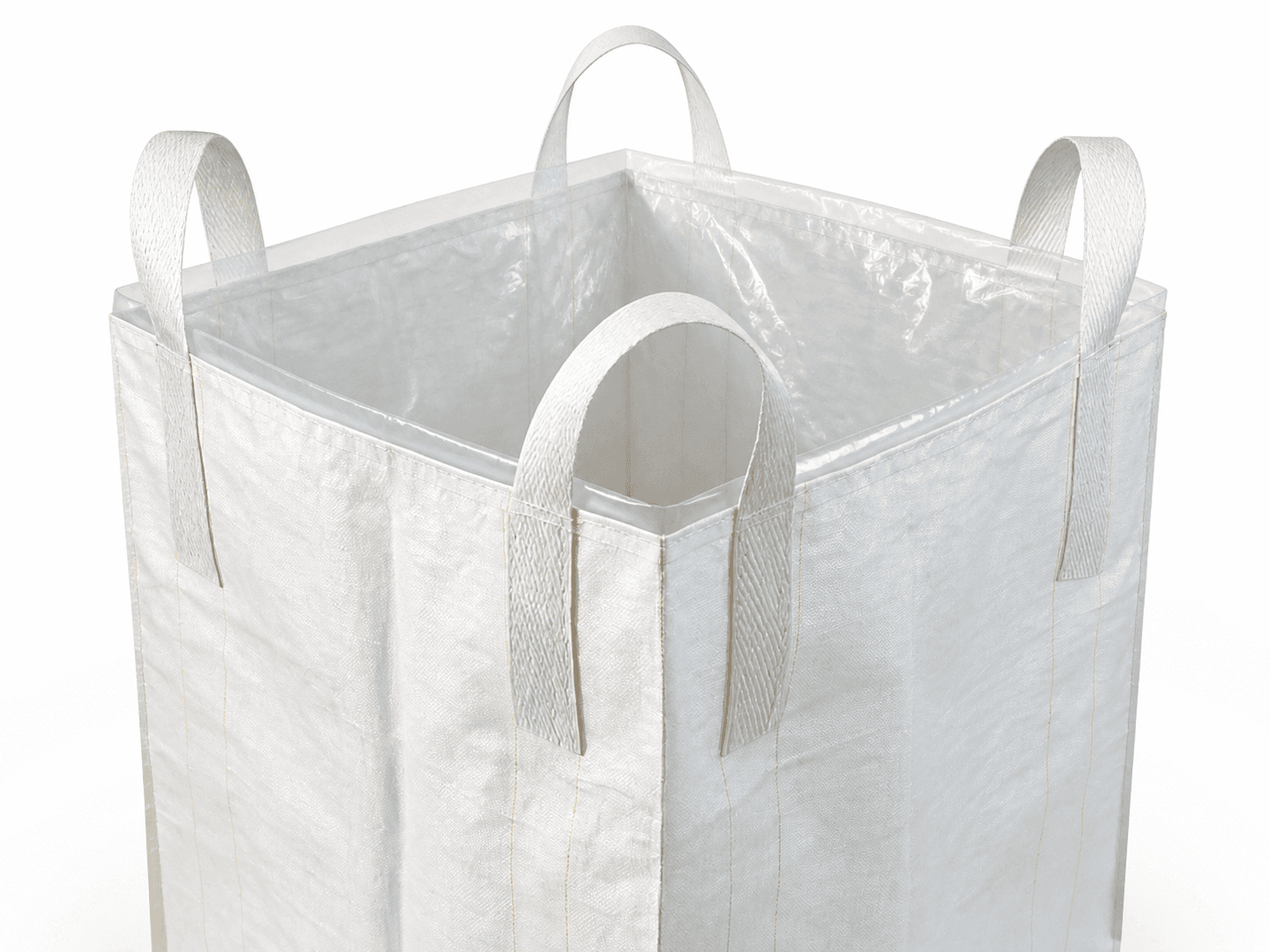 FIBC Handling
When Does an FIBC Need a PE Liner?
How to judge whether a FIBC should have a polyethylene liner — the products and conditions where a liner can help with moisture, fine powders and contamination, and the cases where it may not be needed.
 FIBC Design
FIBC Bottom Types: Flat Bottom vs Discharge Spout
How flat bottom and discharge spout FIBCs differ, and how to choose based on how the bag is emptied, how often it is reused and how the material behaves.
 FIBC Design
FIBC Top Types: Open Top vs Duffle Top vs Filling Spout
How open top, duffle top and filling spout FIBCs differ, and how to choose between them based on your filling equipment, dust control needs and the product you are packing.