01
The top
The full-width open top accepts material from almost any filling line — a conveyor, spout or manual chute — with no connection required. Filling is fast and simple, and the top is closed by tying or folding the fabric before handling.


Classic Structure
StandardOpen top · Flat bottom
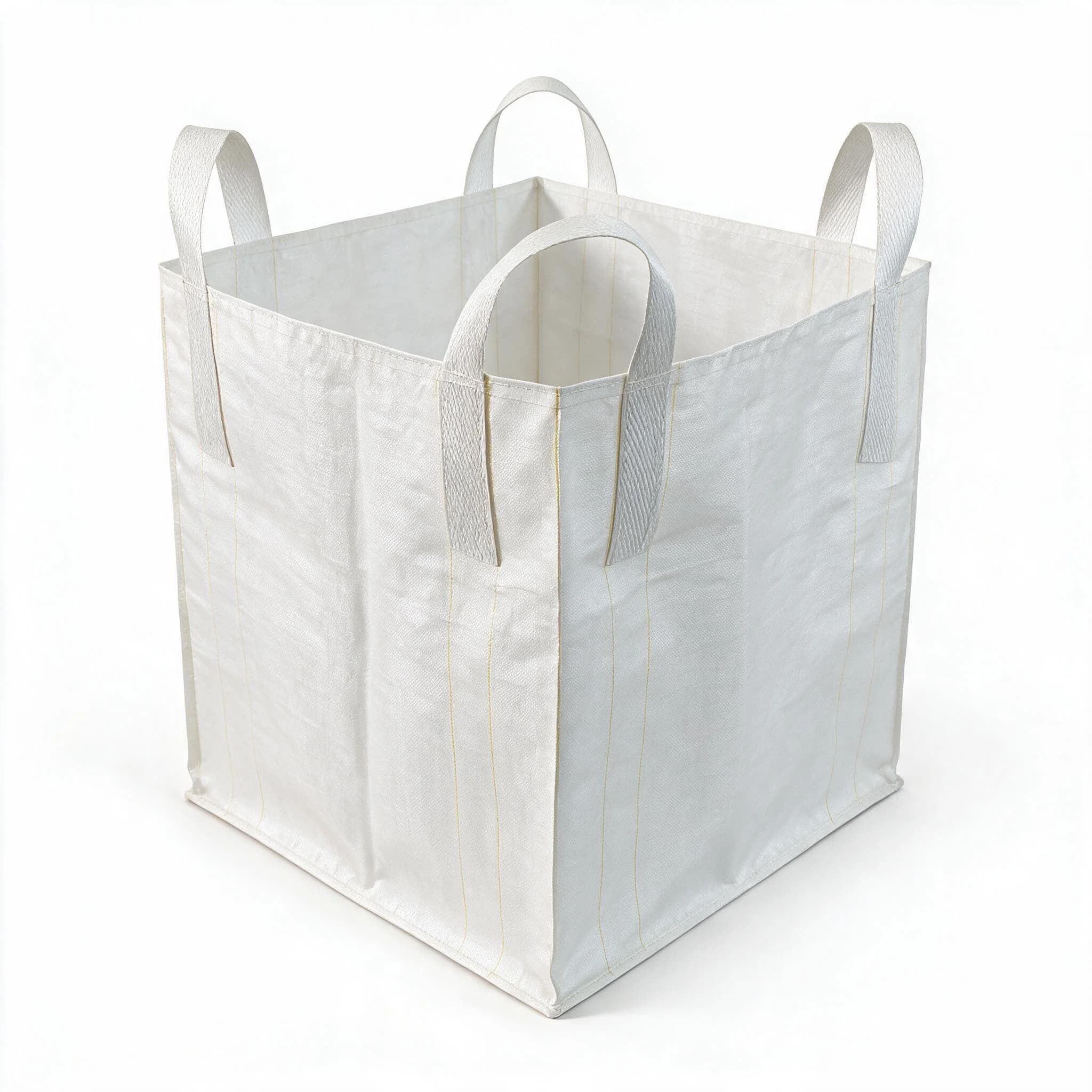
Classic Structure
An open-top FIBC is the most direct way to fill a bulk bag: the entire top is open, so material falls straight in from a conveyor, spout or chute with no restriction. On a flat bottom the bag stands level on a pallet, lifts cleanly, and is emptied by cutting or tipping. It is the simplest and most economical of the classic structures, and the foundation most bulk operations start from.
01
The full-width open top accepts material from almost any filling line — a conveyor, spout or manual chute — with no connection required. Filling is fast and simple, and the top is closed by tying or folding the fabric before handling.
02
The flat bottom is a single continuous panel sewn square to the body. It stands level on a pallet or floor, lifts with a stable base, and is discharged by cutting the bottom open or tipping the bag. One-piece construction keeps it durable and economical.
03
Granular and lump materials that are free-flowing and not moisture-sensitive in handling — seeds, grain, resin pellets, sand, aggregates and raw minerals. For fine powders or dust-sensitive products, a top that closes more tightly or a bottom that discharges through a spout is usually preferred.
Handling Advantages
No filling connection is needed — material drops straight into the open top from any conveyor, spout or chute. This makes open-top bags one of the fastest structures to fill, with no alignment of spout and filling head.
Discharge is by cutting the bottom open or tipping the bag. Simple and economical for one-way use; less suited to processes that need controlled, repeated or dust-tight emptying.
The flat bottom stacks level on a pallet and stands without support, which keeps transport and warehouse storage straightforward. Loaded bags sit square in containers and on racks.
Open Top / Flat Bottom FIBC
The specifications shown are typical configurations. Final specifications should be confirmed according to the packed material, bulk density, filling method, handling method and transportation conditions.
Material Guide
Six practical examples selected around the bag opening, discharge method and common African mining, construction, agricultural and industrial supply chains.
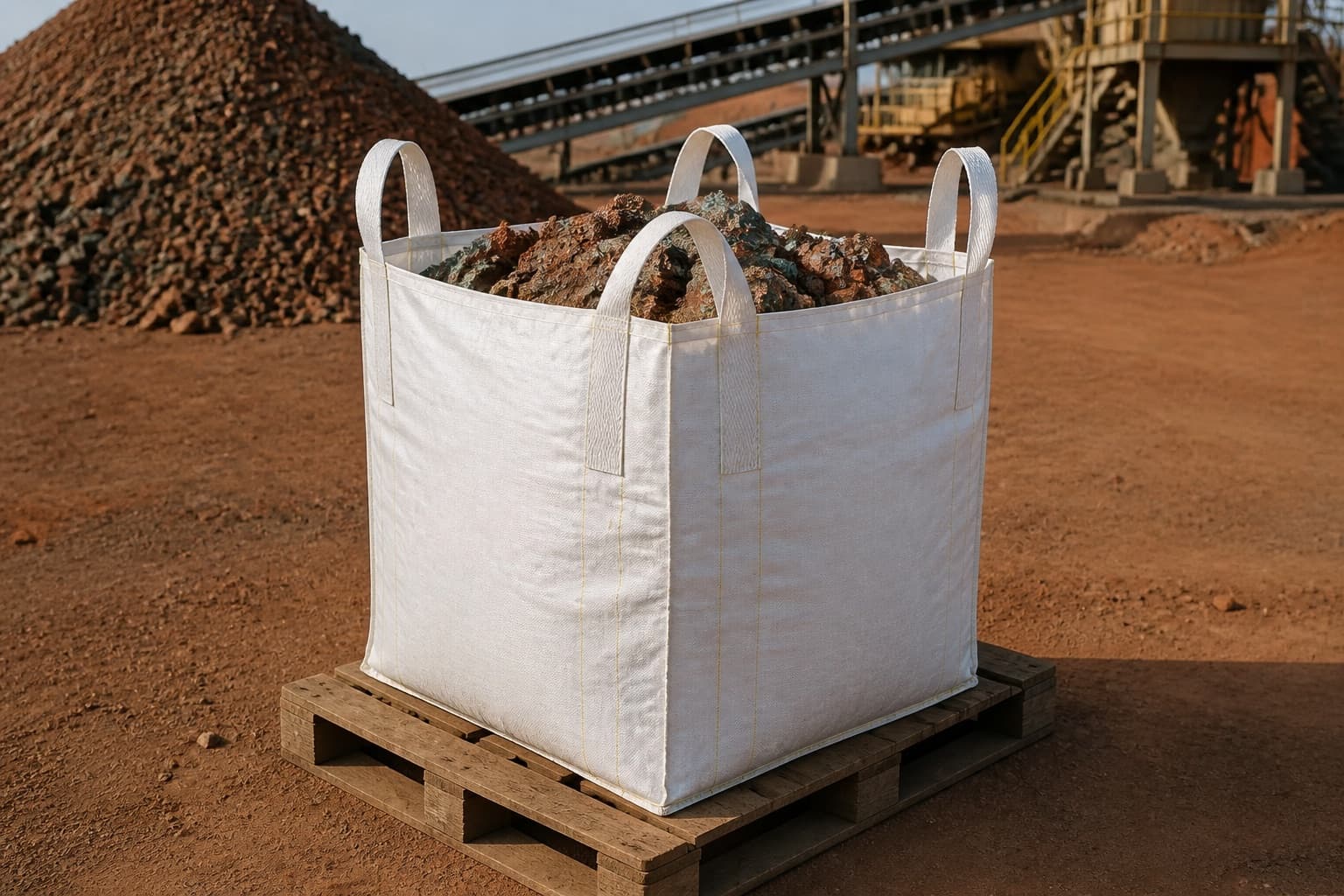
Coarse copper-bearing ore can load directly from a chute or conveyor. The flat base supports straightforward palletized transport.
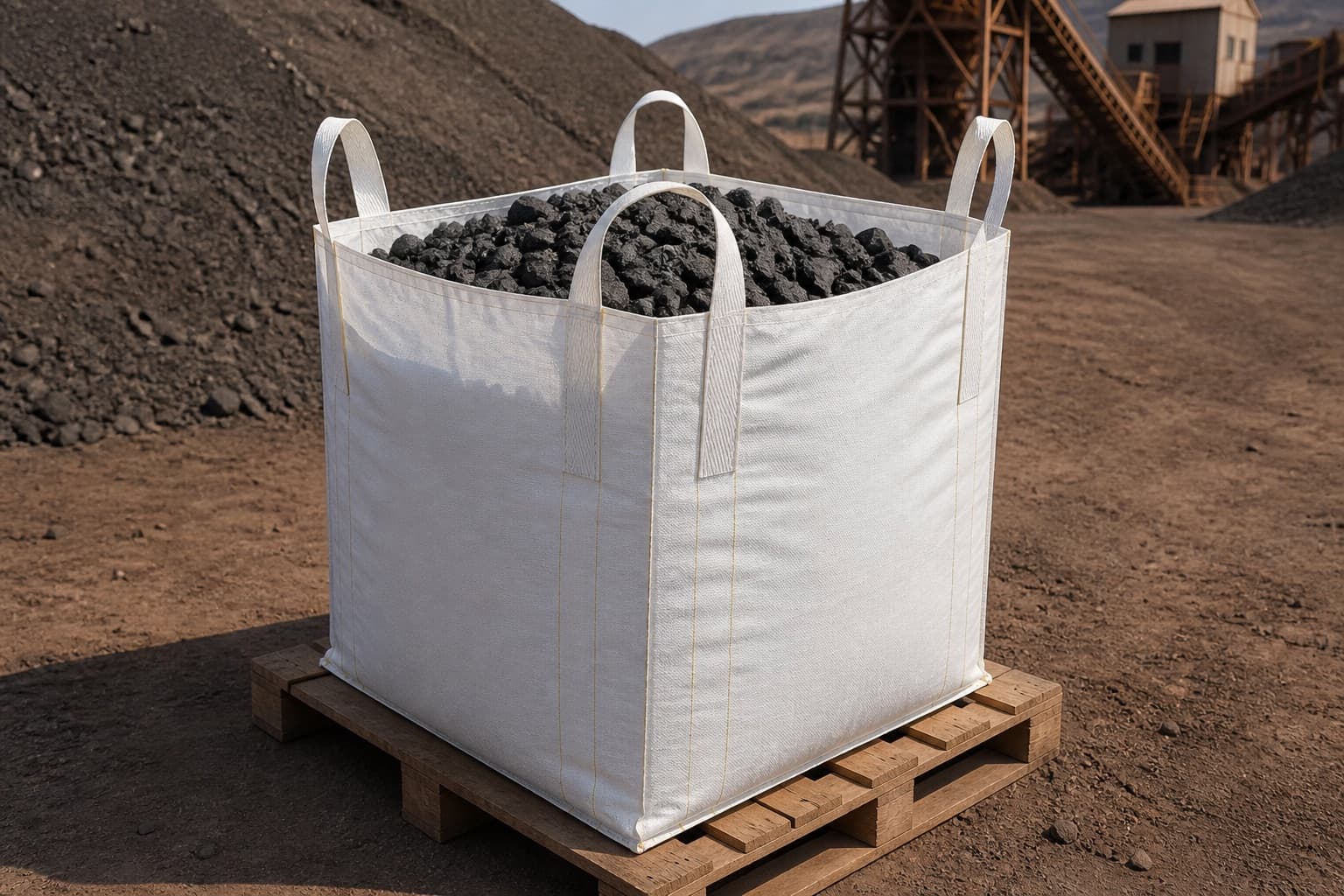
Dense, abrasive manganese-ore lumps suit unrestricted top loading. Final bag volume and SWL must follow the actual bulk density.
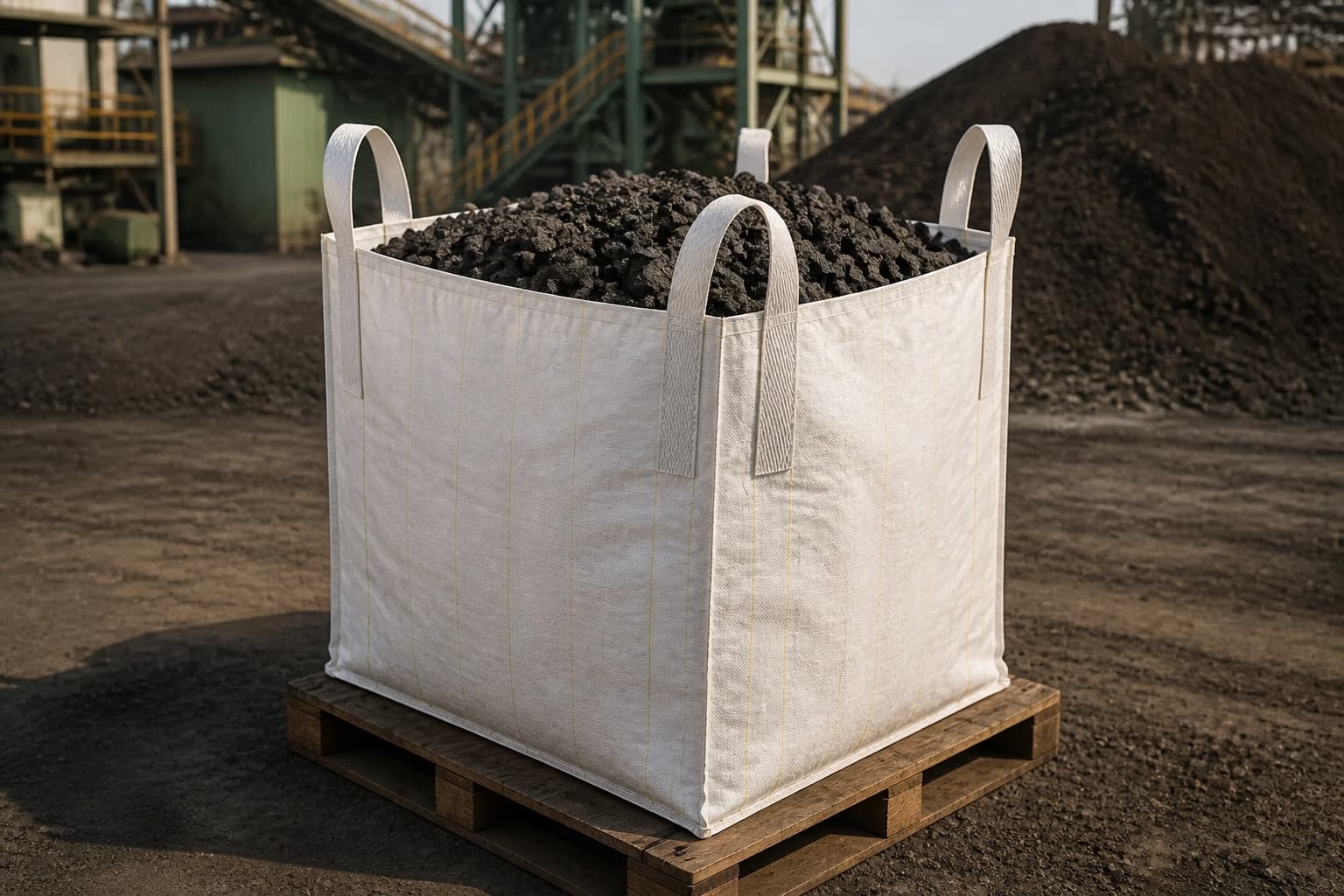
Chromite lumps move efficiently through a wide opening, while the level base keeps the loaded bag square on a pallet.
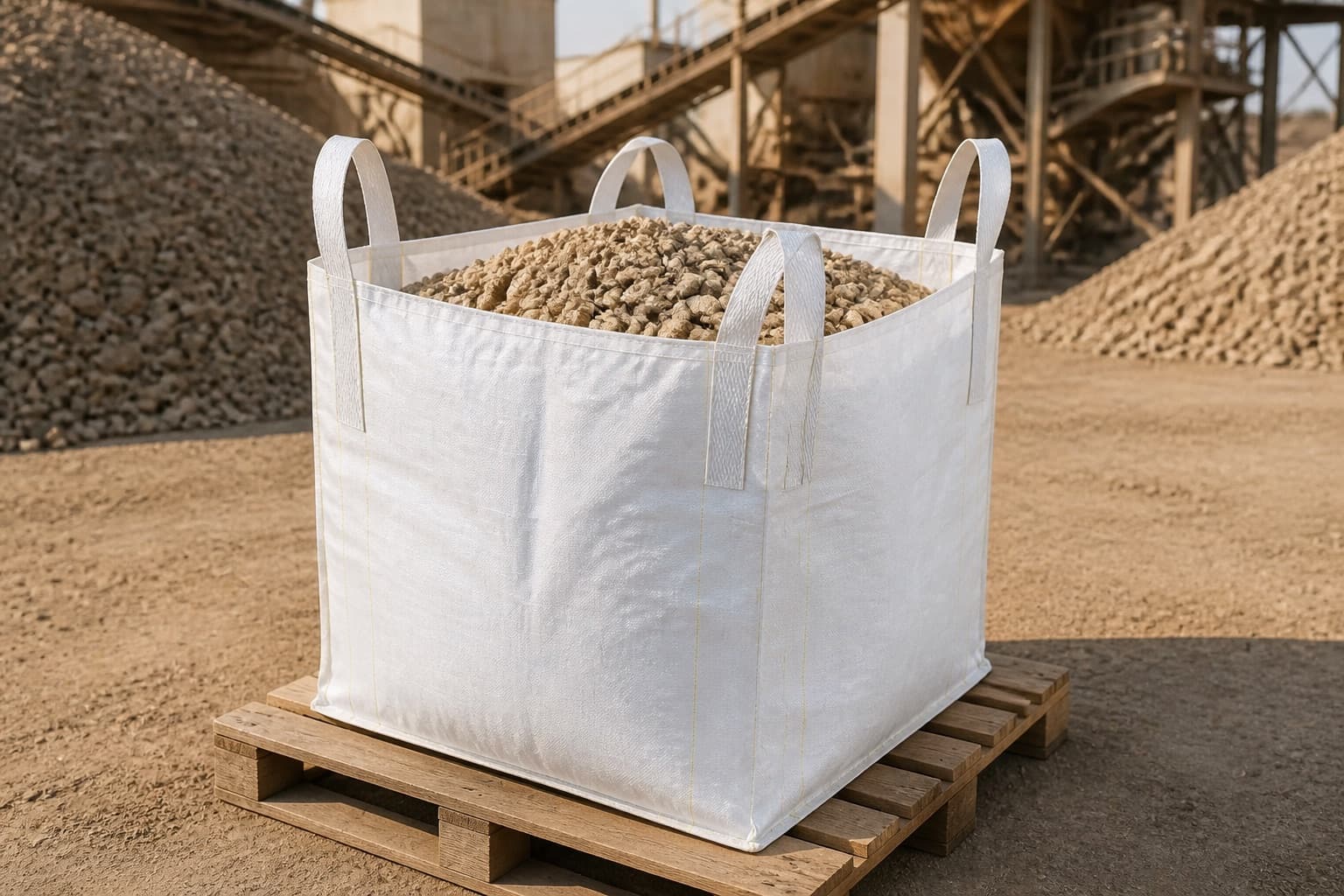
Dry phosphate-rock fragments fill quickly through the full opening and are well suited to simple, one-way bulk transport.
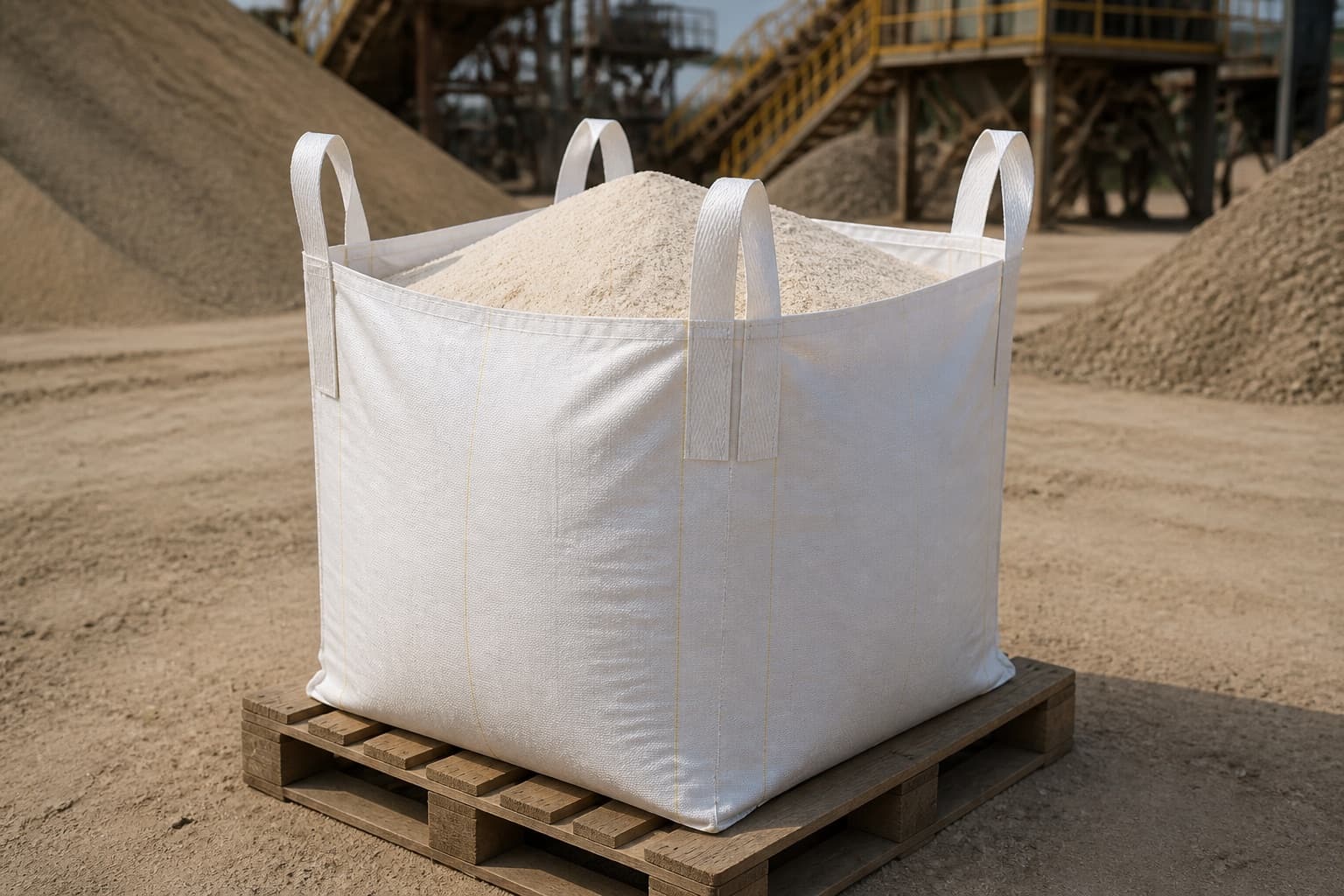
Coarse, free-flowing silica sand suits this structure where open filling and discharge by tipping or cutting are acceptable.
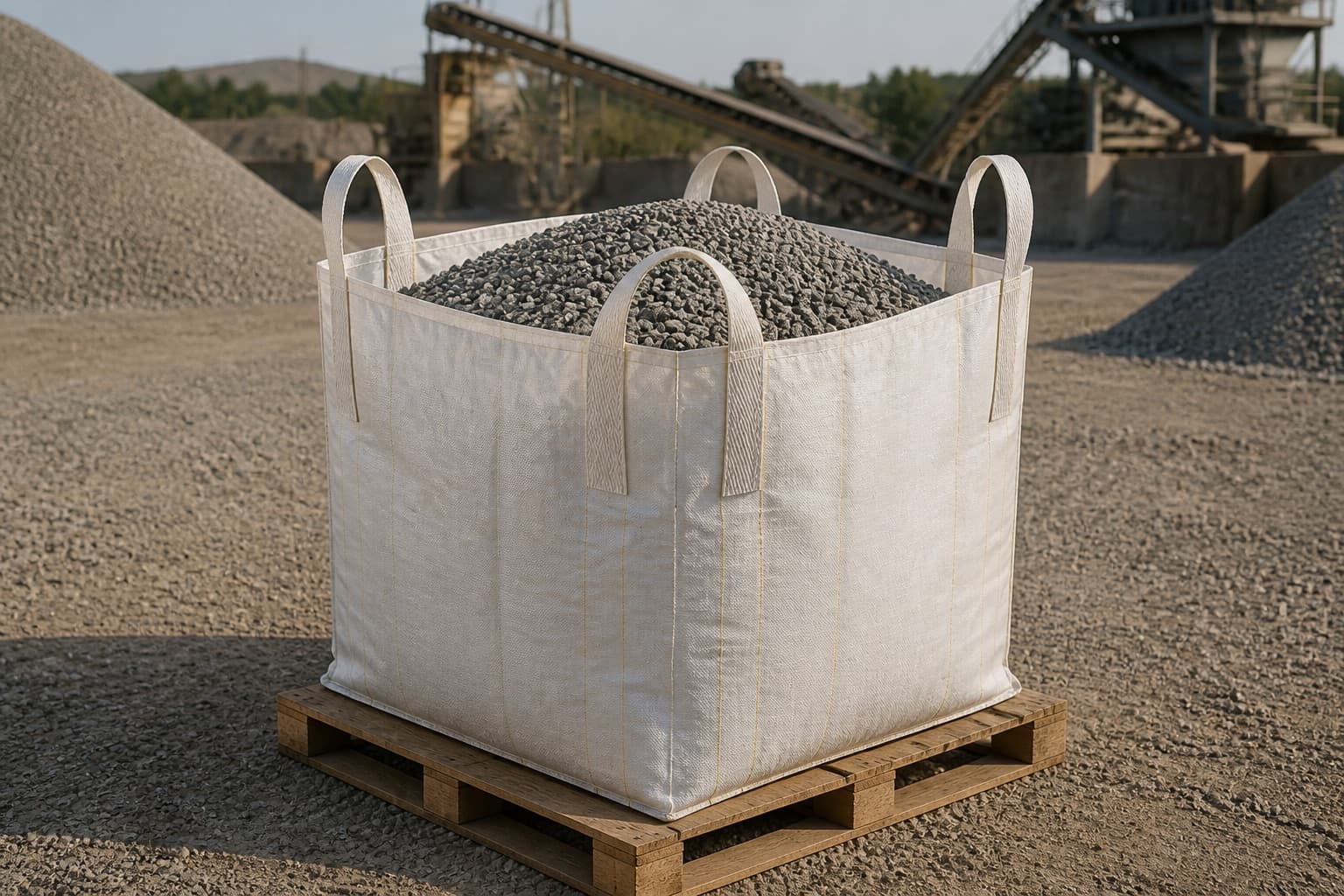
Graded aggregate and small stone fill quickly through an open top, with a flat base that is practical for pallet movement.
A full-width open top on an economical flat base — the straightforward workhorse of bulk export.