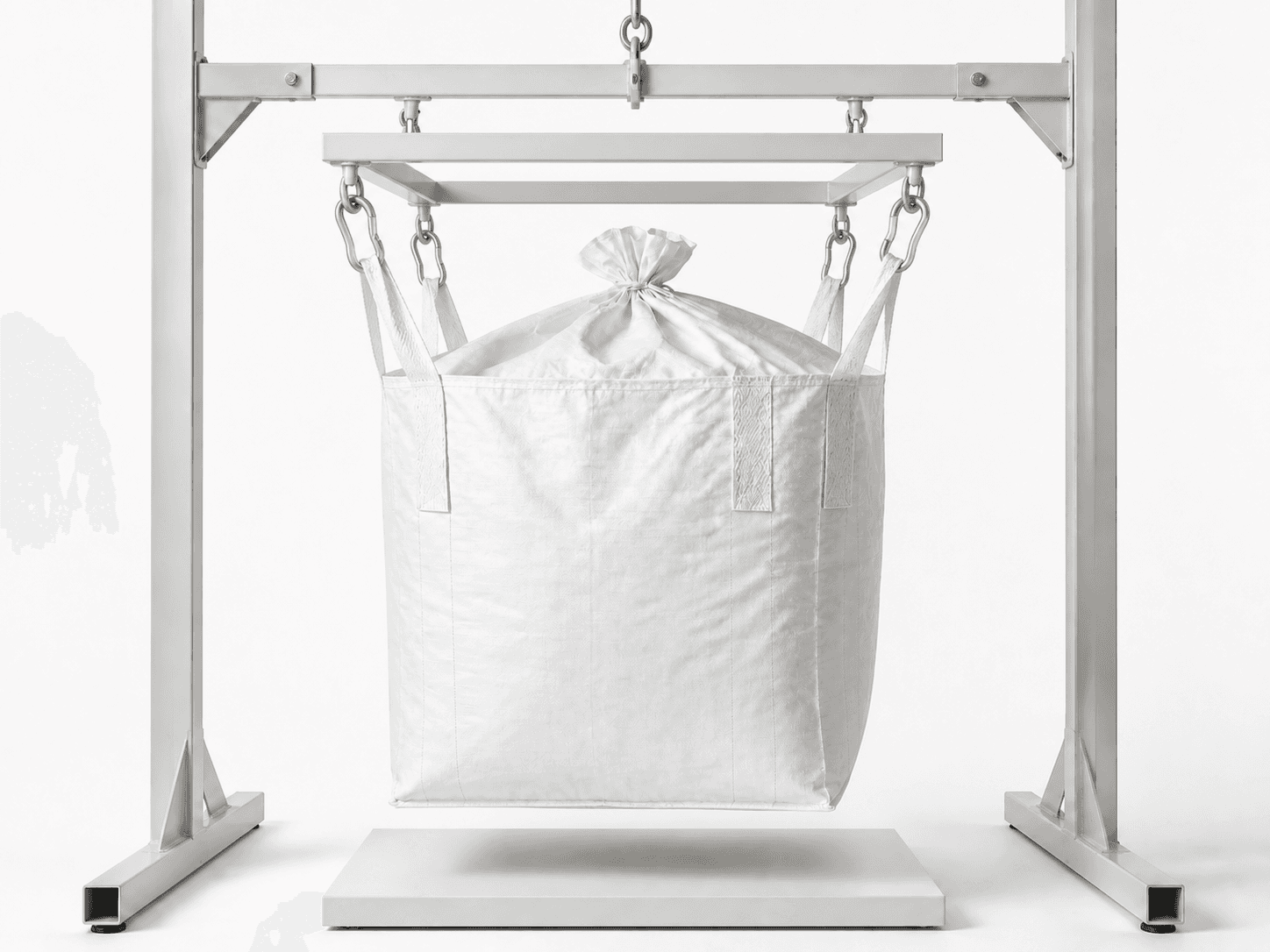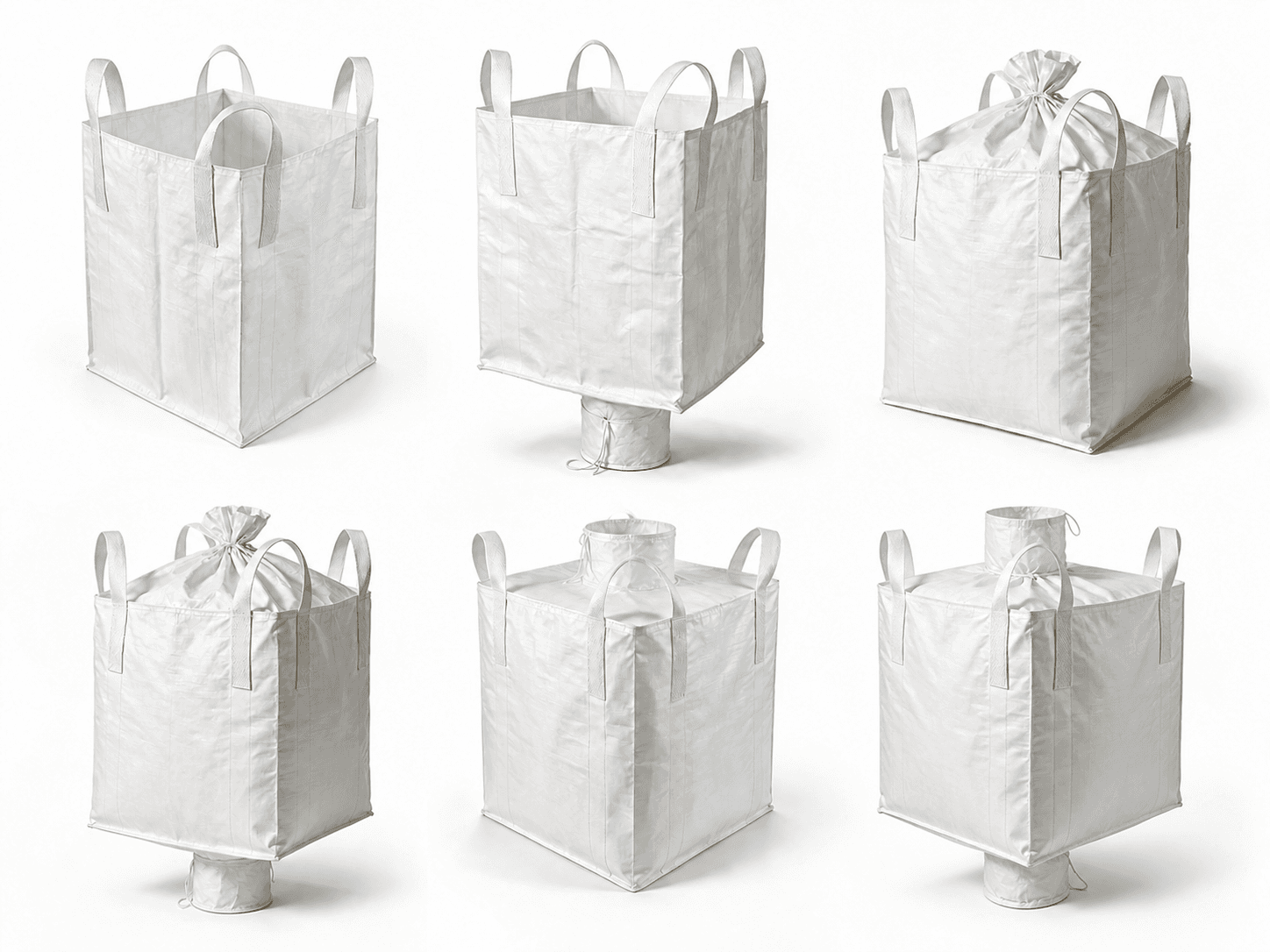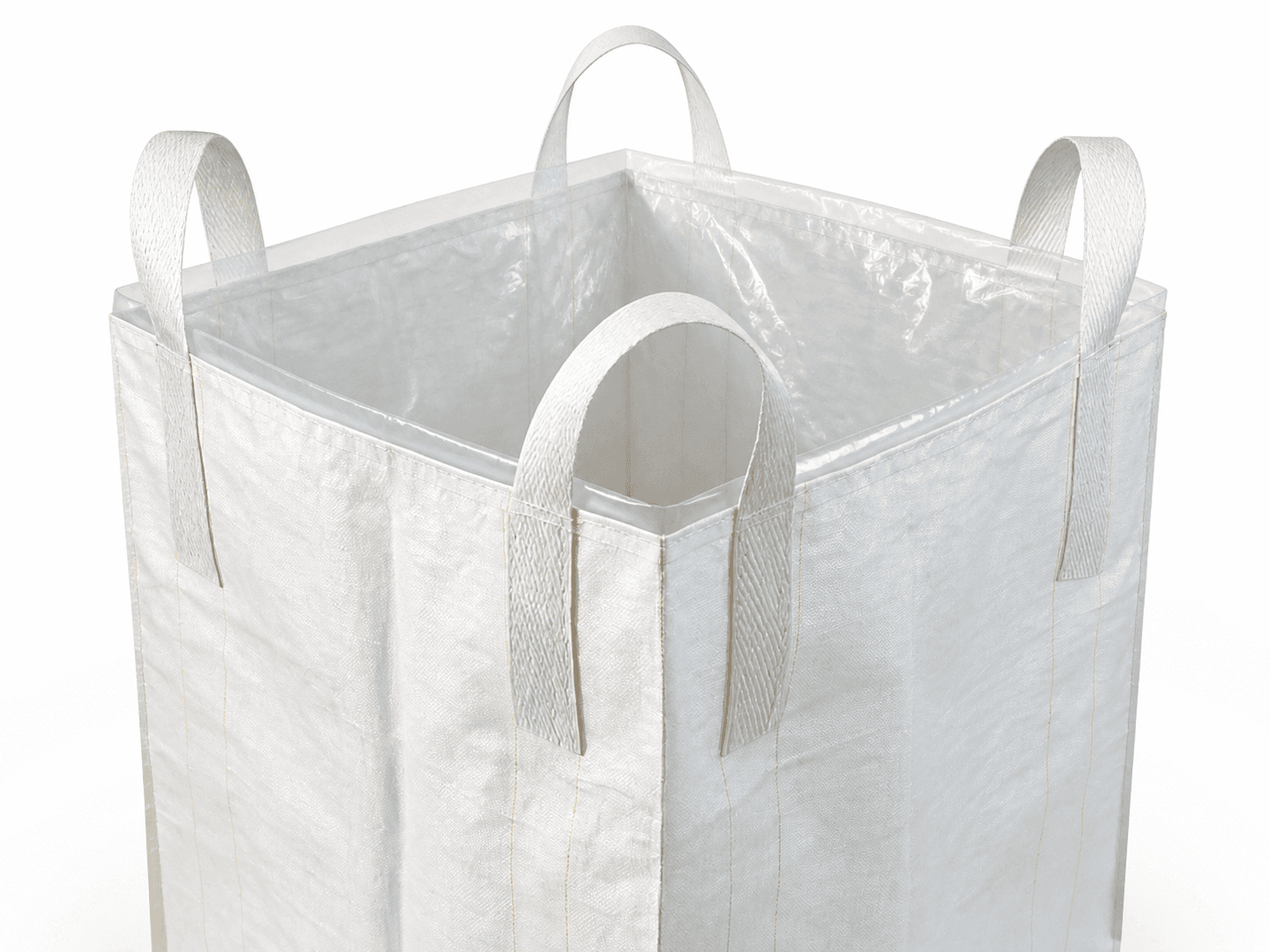
The size of a FIBC is usually given as three numbers: length, width and height. Those three numbers look simple, but turning them into a bag that actually holds your target weight takes one more step — understanding how bulk density connects volume to weight, and how a filled bag differs from the flat, empty one.
This guide explains how size is described, why the volume you get is not the same as the volume you calculate, and how to work from your product's bulk density to a sensible starting size.
How FIBC size is described
A FIBC size is normally stated as the internal dimensions of the bag:
- Length × width — the base footprint of the bag.
- Height — the distance from the bottom to the top of the bag.
These are the dimensions of the flat, empty bag as it comes off the line. They are useful for planning how the bag fits on a pallet, in a container, or under a filling head — but they are not the shape the bag takes once it is filled.
It helps to think of the three numbers as a starting point. The real, working bag has its own shape, influenced by the product inside it and how the bag is handled.
Nominal volume vs effective volume
The nominal volume is the simple product of length × width × height — the volume of the flat, empty bag. It is a useful reference, but it is not the volume you can rely on.
When a bag is filled, several things happen:
- The material settles and compresses under its own weight.
- The walls bulge outward, so the width grows while the height falls.
- The top of the bag sags, reducing the headroom you planned for.
- The bag deforms under load, particularly if it is lifted and moved.
The combined effect is that the effective usable volume — the volume actually available to the product — is generally smaller than the nominal volume of the flat bag. Exactly how much smaller depends on the material, the fill level and the bag design, which is why a nominal size alone is not enough to plan a load.
Working from bulk density
Bulk density is the weight of a loose volume of the product, normally in kilograms per cubic metre. It is the bridge between the two things you actually care about: how much weight you want to move, and how much space that weight takes up.
The basic relationship is simple:
volume needed ≈ target fill weight ÷ bulk density of the product
If you know the target weight and the bulk density, you can estimate the volume the product will occupy. Add headroom for filling, closing and the way the bag settles, and you have a starting size.
Two cautions apply. First, bulk density is a property of the actual product — particle size, moisture and handling all affect it, so a handbook value is only a starting point. Second, the formula gives the volume of the product, not the nominal volume of the bag; the bag must be large enough to hold that volume plus the settling and deformation described above.
A worked example
These numbers are an example to show the calculation — they are not a fixed specification.
Suppose a product has a bulk density of roughly 800 kg/m³ and you want to fill about 1000 kg. The volume the product occupies is approximately:
1000 kg ÷ 800 kg/m³ ≈ 1.25 m³
A bag with a nominal volume comfortably above 1.25 m³ — say a size in the region of 0.9 m × 0.9 m × 1.3 m — would be a plausible starting point, because the filled bag will not hold its flat shape and the product will settle below the top. From there, the size is refined against the actual bulk density and filling behaviour.
Notice the caution baked into the example: the answer depends entirely on the bulk density, which must be confirmed for the real product rather than assumed.
Loading weight and volume together
Size and weight are two halves of one decision:
- If the bag is too small for the target weight, the product cannot fit, or fills too high for safe closing and lifting.
- If the bag is too large for the weight, it is only partly filled, the fabric is under-used, and the empty space lets the product shift during transport.
The two are linked by bulk density. A dense product such as manganese ore packs a lot of weight into a small volume, so a compact bag carries a high load. A light product needs more volume for the same weight. Our manganese ore application and cement application show two very different size-to-weight relationships in practice.
The practical approach is to fix the target weight first, estimate the required volume from the actual bulk density, and then choose a size that holds that volume with reasonable headroom — before finalising the working load together with the size (see our SWL and safety factor guide for how the two are confirmed together).
Confirm the size against the real product
The honest ending is the same as for every other decision in a FIBC specification: the size is confirmed against the actual product. Bulk density can vary by grade and batch, filling methods settle material differently, and the bag design affects how the filled shape behaves.
When you request a quote, the most useful inputs for the size decision are the product name, its bulk density, the target fill weight, and the filling and closing method. With those, a supplier can propose a starting size and refine it into a specification that holds your weight and works with your equipment. Our guide to choosing a FIBC puts the size decision in the wider context of the full specification.